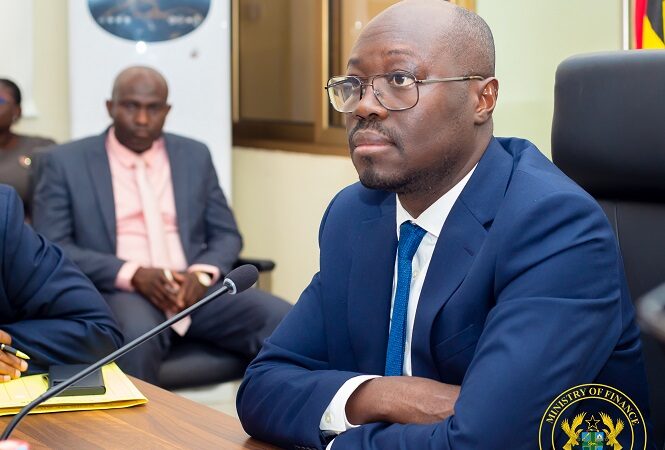
Ghana’s Finance Minister, Dr. Cassiel Ato Baah Forson, has issued a strong call to Ghanaians living abroad and international investors to take advantage of what he describes as a rapidly recovering economy, declaring that Ghana is once again open for business.
Speaking during President John Dramani Mahama’s Town Hall Meeting with members of the Ghanaian diaspora in London, Dr. Forson highlighted what he described as significant improvements in Ghana’s economic outlook, urging overseas Ghanaians to return home, invest, and contribute to national development.
“Ghana is open for business. We welcome you. Come home and contribute,” Dr. Forson told participants.
The engagement formed part of President Mahama’s five-day official visit to the United Kingdom aimed at strengthening ties with the Ghanaian diaspora and attracting investment into key sectors of the economy.
Diaspora Remittances Remain Critical
Dr. Forson emphasized the growing importance of remittances in supporting Ghana’s economy, revealing that Ghanaians abroad sent home more than $7 billion in 2025.
According to the Finance Minister, discussions are underway between the Ministry of Finance and the Bank of Ghana to ensure that diaspora remittances are fully captured within Ghana’s balance of payments framework.
He described the diaspora community as an essential partner in Ghana’s development journey.
“We see you as our brothers and sisters abroad, and you still have a major role to play in nation-building,” he said.
Drawing from his own experience of living in London, Dr. Forson encouraged Ghanaians abroad to consider returning home to contribute their skills, expertise, and investments toward Ghana’s future growth.
Reflecting on Ghana’s Economic Crisis
The Finance Minister acknowledged the severe economic challenges the country faced in recent years, particularly during the 2022 economic downturn.
According to him, Ghana experienced one of the most difficult periods in its economic history, characterized by rapid currency depreciation, soaring inflation, declining investor confidence, and limited access to international capital markets.
The situation led to multiple sovereign credit rating downgrades by major international agencies, including Moody’s, Fitch Ratings, and S&P Global.
Dr. Forson noted that the crisis affected virtually every sector of the economy, with institutions such as COCOBOD struggling to secure international financing while local banks faced significant challenges accessing external funding.
Ghana’s Economic Recovery Gains Momentum
Despite the difficulties, Dr. Forson said the government’s economic recovery measures are beginning to yield positive results.
According to him, Ghana recorded a GDP growth rate of 6 percent in 2025, while non-oil GDP growth reached 7.6 percent — the highest level recorded in 14 years.
He also disclosed that Ghana’s economy has now surpassed the $100 billion mark, positioning the country among Africa’s largest economies.
Other indicators highlighted by the Minister include:
- GDP per capita rising to $3,385
- Debt-to-GDP ratio falling to 44.7%
- Inflation dropping significantly from 23.8% to 3.4%
- Treasury bill rates declining sharply
- Policy rate reduced from 27% to 14%
- Current account surplus reaching 8.3% of GDP
According to Dr. Forson, these achievements demonstrate that fiscal discipline and prudent economic management are beginning to restore confidence in the Ghanaian economy.
“The good news is that Ghana is back,” he declared.
Government Eyes Sustainable Growth
While celebrating the recent gains, the Finance Minister stressed that the government remains focused on maintaining macroeconomic stability and sustaining the recovery momentum.
He assured investors and development partners that President Mahama’s administration remains committed to policies that promote growth, investment, job creation, and long-term economic resilience.
The government believes continued support from the Ghanaian diaspora, combined with domestic reforms and private sector investment, will play a vital role in driving the next phase of Ghana’s economic transformation.
Jaysonlive Analysis
The message from Finance Minister Dr. Cassiel Ato Forson is clear: Ghana is actively positioning itself as an attractive destination for investment once again.
While economic challenges remain, recent improvements in inflation, debt levels, economic growth, and investor confidence suggest the country is making steady progress toward stability. The government’s renewed focus on engaging the diaspora could unlock billions of dollars in investment capital, expertise, and entrepreneurial opportunities that could further accelerate Ghana’s development agenda.
The real test, however, will be whether these economic gains translate into more jobs, stronger businesses, improved living standards, and sustainable opportunities for ordinary Ghanaians in the years ahead.
For the latest business, entertainment, investment, trade and economic development stories from Ghana and across Africa, keep reading Jaysonlive.com.