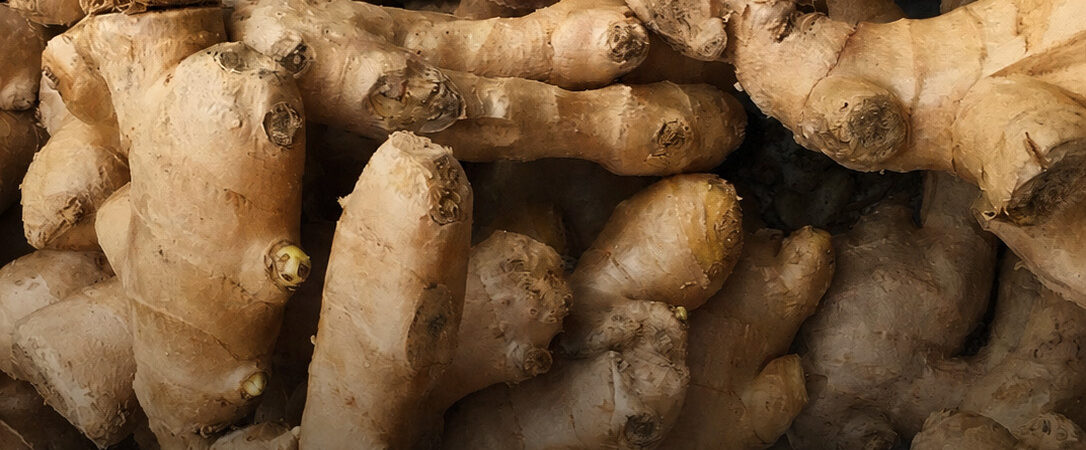
Rising Demand for Ghanaian Ginger Creates New Opportunities for Farmers, Processors and Exporters
Ghana’s ginger industry is quietly becoming one of the country’s most promising agricultural success stories.
Once viewed primarily as a household spice, ginger has evolved into a high-demand commercial crop attracting attention from food manufacturers, health product companies, exporters and investors. Across major markets in Ghana, demand continues to outpace supply, pushing prices higher and creating new opportunities throughout the agricultural value chain.
As global demand for natural health products, spices and processed agricultural commodities continues to rise, Ghana finds itself sitting on what could become a multi-million-dollar export and industrialisation opportunity.
The challenge now is whether the country can build the infrastructure, processing capacity and farmer support systems needed to fully capitalize on this growing market.
Why Demand for Ginger Is Surging
Unlike many agricultural commodities that rely on a single market, ginger enjoys strong demand from multiple sectors simultaneously.
Food processing companies across Ghana purchase large quantities of ginger for use in seasoning products, spice blends, condiments and packaged food ingredients. These companies require year-round supplies, making ginger one of the most commercially important raw materials within the local food manufacturing sector.
At the same time, demand from Ghana’s growing herbal medicine and wellness industry continues to accelerate.
Producers of herbal drinks, immunity boosters, detox products, health tonics and natural remedies are increasing their purchases as consumers become more health-conscious and embrace wellness-focused lifestyles.
International demand is also playing a major role.
Export buyers across Europe, the Middle East and other global markets continue to seek Ghanaian ginger because of its strong flavour profile, pungency and high essential oil content. As export demand rises alongside local consumption, competition for available supply has intensified significantly.
Farmers Struggle to Meet Market Demand
Although Ghana produces high-quality ginger, supply remains constrained.
Most ginger production comes from smallholder farmers in the Ashanti, Eastern, Bono and Northern regions. Despite growing demand, many producers face significant challenges that limit their ability to expand operations.
Rising fertilizer costs, transportation expenses, limited access to financing and inadequate storage facilities continue to affect productivity and profitability.
Post-harvest losses remain one of the biggest obstacles.
Without proper drying centres, storage facilities and processing plants, large volumes of harvested ginger are lost before reaching markets. These losses reduce available supply, increase prices and limit the earnings farmers could otherwise generate.
As a result, consumers pay higher prices while many farmers still fail to receive the full value of their produce.
The Billion-Dollar Processing Opportunity
Perhaps the biggest opportunity lies not in producing more ginger, but in processing more of it locally.
Currently, much of Ghana’s ginger is exported in raw or minimally processed form. This means the highest-value activities—including drying, grinding, extraction, packaging and branding—often take place outside Ghana.
By investing in local processing facilities, Ghana could retain significantly more value within its economy.
Products such as ginger powder, dried ginger, ginger extract and ginger essential oil continue to enjoy growing demand across global food, pharmaceutical and wellness industries.
Developing a stronger processing sector would create jobs, increase export earnings, support farmers with better prices and reduce dependence on raw commodity exports.
The Health and Wellness Market Is Expanding
Another major growth driver is the increasing popularity of ginger-based wellness products.
Urban consumers are increasingly purchasing ginger shots, ginger and turmeric drinks, ginger-infused honey, herbal teas and natural health supplements.
This shift reflects broader global trends towards preventive healthcare and natural remedies.
Scientific studies continue to highlight the anti-inflammatory and antioxidant properties of ginger, helping drive consumer confidence and increasing demand for ginger-based products both locally and internationally.
For entrepreneurs and small businesses, this growing health economy presents significant opportunities to develop innovative products and capture emerging market segments.
Jaysonlive Analysis
Ghana’s ginger industry represents exactly the type of value-chain opportunity policymakers have been promoting through industrialisation initiatives such as the Feed the Industry Programme and the 24-Hour Economy agenda.
The fundamentals are already in place. Demand is strong. Export markets are growing. Food processing companies are actively purchasing from local farmers. Consumer interest in health and wellness products continues to expand.
What remains is the next phase of investment.
Ghana needs modern storage facilities, processing plants, farmer financing programmes, export certification systems and stronger market linkages that allow producers to capture greater value from every kilogram of ginger harvested.
If these investments are made, ginger could become one of Ghana’s most valuable non-traditional agricultural exports over the next decade.
The opportunity is no longer theoretical. The market has already spoken.
Now the focus must shift to scaling production, expanding processing and building a globally competitive ginger industry capable of generating jobs, export earnings and sustainable economic growth.
For the latest business, entertainment, investment, trade and economic development stories from Ghana and across Africa, keep reading Jaysonlive.com.