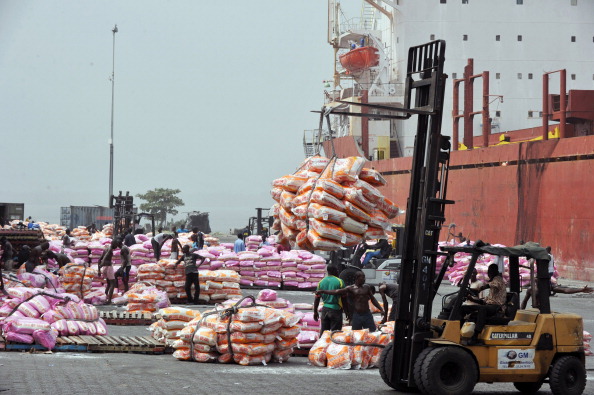
Ghana’s path to rice self-sufficiency will not be paved with patriotic appeals or sudden import bans. It will be built on producing rice that Ghanaian consumers actually want to buy. That is the unambiguous position of Mr Kofi Akuamoah Boateng Baidoo, Executive Director of the Ghana Rice Federation, and it is a perspective the country’s policymakers and agricultural institutions would do well to take seriously.
Speaking in an interview with the Ghana News Agency, Mr Baidoo drew a clear line between emotional protectionism and the kind of strategic transformation Ghana’s rice industry actually needs. “Ending rice importation in Ghana will not happen through slogans, patriotism, or abrupt import bans. It will happen when Ghanaian rice consistently meets the expectations of major consumers of rice,” he said.
His argument is grounded in a simple but often overlooked economic truth. Increasing production alone is not sufficient. If the rice being produced does not meet the quality standards consumers demand, no amount of output will shift purchasing behaviour. The cycle that matters is one where quality drives demand, demand rewards producers and increased revenue funds further expansion. Break the quality link and the entire chain falls apart.
The price data Mr Baidoo cited makes the consumer preference point impossible to ignore. A 5kg bag of Thai rice currently sells on the Ghanaian market for between GH¢140 and GH¢180. A 4.5kg bag of local rice sells for between GH¢75 and GH¢130. Ghanaians are already paying a significant premium for imported rice, not because they are unpatriotic, but because the imported product consistently delivers what they are looking for. “This proves something important: Ghanaians are willing and able to pay premium prices for rice that meets their preferences. This is good news for the local rice industry,” Mr Baidoo said.
The implication is direct. If local rice can match that quality benchmark, the market is there and consumers will pay for it.
On the question of how to get there, Mr Baidoo was equally specific. He proposed financing a targeted group of smallholder farmers to produce high quality rice, alongside acquiring larger parcels of land to sublease to commercial rice farmers capable of operating at scale. He also called for the establishment of an apolitical Rice Board to coordinate policy implementation and manage the distribution of inputs, mechanised equipment and incentives for both local and foreign investors. The apolitical framing is deliberate. Policy continuity across election cycles has historically been one of the most damaging weaknesses in Ghana’s agricultural development efforts.
Mr Baidoo identified four qualities he described as the defining characteristics that would shift consumer demand decisively toward local rice. The grains should separate cleanly when cooked, carry an appealing aroma, be free from impurities and deliver consistent quality every time a consumer purchases the product. These are not extraordinary demands. They are the baseline expectations of any rice consumer, and meeting them reliably is what separates a competitive product from one that sits on a shelf while Thai rice sells out.
He also called for genuine collaboration between the Centre for Scientific and Industrial Research, the Irrigation Development Authority and farmer-based organisations including the Ghana Rice Federation itself, to align production practices with those consumer preferences at every point in the value chain.
“The solution can never be emotional protectionism. The solution is strategic transformation through ruthless and consistent execution,” Mr Baidoo said.
Jaysonlive Analysis
Mr Baidoo is saying something that needs to be heard loudly in Ghana’s agricultural policy circles. The instinct to protect local industry through import restrictions is understandable but it is not a strategy. Consumers who have been eating a particular quality of rice for years will not switch simply because imports become more expensive or less available. They will find ways around restrictions or simply eat less rice.
The only durable path to reducing rice imports is building a local product that competes on merit. That requires investment in seed quality, irrigation, processing technology, storage and distribution, all held together by consistent policy and institutional coordination. Ghana has the agricultural capacity. What it has historically lacked is the execution discipline Mr Baidoo is calling for. If WAMPEX and the 24-Hour Economy agenda represent a shift toward that kind of serious industrial thinking, then the rice sector deserves to be part of that conversation urgently.
For the latest agriculture, business, trade and economic development news from Ghana and across Africa, keep reading Jaysonlive.com.