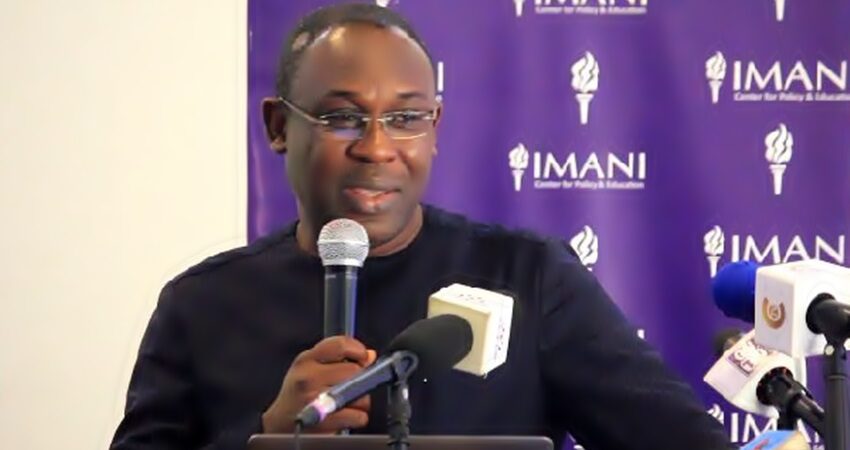
Ghana’s Supreme Court has ruled in favour of the President’s authority to appoint and remove the heads of the country’s security agencies, dismissing a legal challenge brought by policy think tank IMANI Africa and security expert Professor Kwesi Aning.
The landmark decision settles a constitutional debate over the extent of presidential powers in managing Ghana’s security institutions and reinforces the President’s role as the central authority responsible for the nation’s security architecture.
Supreme Court Throws Out IMANI Africa’s Challenge
Delivering the judgment, Justice Gabriel Pwamang, who chaired the panel, dismissed all reliefs sought by the plaintiffs, describing the case as lacking sufficient legal basis.
The Court held that the President’s powers regarding the appointment and removal of security agency heads are firmly grounded in the Constitution.
According to the ruling, the President is responsible for constituting and overseeing Ghana’s security framework, making such appointments part of the constitutional duties attached to the office.
Court Clarifies Constitutional Protection for Security Chiefs
A key issue before the Court was whether certain heads of security agencies enjoy constitutional protection from removal under Article 191 of the 1992 Constitution.
The Supreme Court clarified that the positions of Inspector-General of Police (IGP) and Director-General of Prisons do not fall under the protections outlined in Article 191.
As a result, those office holders cannot rely on that constitutional provision to challenge presidential decisions regarding their appointments or removal.
Immigration and Fire Service Appointments Also Addressed
The Court further explained that the appointments of the Chief Fire Officer and the Comptroller-General of the Ghana Immigration Service are regulated by specific statutory provisions.
However, the judges maintained that these appointments ultimately remain within the discretionary powers of the President as provided by law.
The ruling effectively confirms that the executive branch retains significant authority over the leadership of Ghana’s major security institutions.
Background to the Case
The lawsuit was filed in 2024 by IMANI Africa and renowned security analyst Professor Kwesi Aning.
The plaintiffs argued that the President should not possess unrestricted powers to dismiss the heads of key security agencies without clear constitutional limitations.
They sought a declaration from the Supreme Court that would restrict presidential authority and provide greater security of tenure for affected office holders.
However, the Court disagreed with their interpretation and dismissed the suit in its entirety.
Implications of the Judgment
The ruling is expected to have significant implications for governance, security sector administration, and future appointments within Ghana’s security services.
Legal analysts say the judgment provides greater clarity on the constitutional powers of the President while reinforcing the executive’s role in shaping the leadership of national security institutions.
The decision is also likely to influence future debates on institutional independence, security sector reforms, and constitutional governance in Ghana.
🔥 For the latest juice in politics, governance, business, entertainment, lifestyle, sports, and breaking news from Ghana and around the world, keep it locked on Jaysonlive.com — where the stories that matter come first.